
Front End
Build responsive UIs with JavaScript, TypeScript and ReactJS.

For freshers and professionals, learn advanced frameworks like Spring Boot, Hibernate, REST APIs, React and Microservice with Projects
Pune has become one of India’s biggest IT hubs with major tech parks in Hinjewadi, Kharadi, Magarpatta and Talawade, and Java is still a core backend language for many of these companies. Training providers themselves highlight that fresher Java developers in Pune typically start around ₹3–5 LPA in IT services companies, with product companies and funded startups offering about ₹5–8 LPA to strong freshers, and many developers reaching the ₹7–12 LPA range after 1–2 years of experience.
4 - 6 Months
Classroom & Online
After Completion
 HTML5
HTML5 CSS3
CSS3 JavaScript
 TypeScript
 ReactJS
 Core Java
JDBC
Servlets / JSP
Core Java
JDBC
Servlets / JSP Spring
 Spring Boot
Spring Security
Spring Boot
Spring Security Hibernate / JPA
 MySQL
Spring Data JPA
MySQL
Spring Data JPA Postman
 Maven
Maven Git
Git GitHub
Build responsive UIs with JavaScript, TypeScript and ReactJS.
Java apps, Spring Boot backends and REST APIs.
Store, query and connect data for Java full-stack apps.
Integrated AI Tools You Will Master ✨
 GitHub Copilot
 ChatGPT & GPTs
 Claude AI
 Diff Checker
 Grammarly
 Write Human
 Wix ADI
 Canva AI
 SQL Query Builder
 Whimsical Diagrams
Talk to ECTI’s expert team teaching since 1997 and get your doubts cleared.
Watch videos of our real students sharing their journey from learning to getting placed.


Watch the video of ECTI students sharing their journey from learning Java to getting placed through our java course in pune
Afreen Sanaulla
BBA (Finance) → Java Full Stack
HR professional who switched to IT after 2 years as US IT Recruiter

Aparna Pawar
Diploma IT → Java Developer @ ETLTC
Cleared first interview after 10–12 hands-on projects at Envision
Mrunmai Kudale
MCA (2023) → Frontend Dev @ Consociate
Had 1-year gap + fresher tag — placed through practical training
Om Pimpale
BE Computer → Frontend Dev @ Jefel
Bridged academic theory to real industry work through Envision
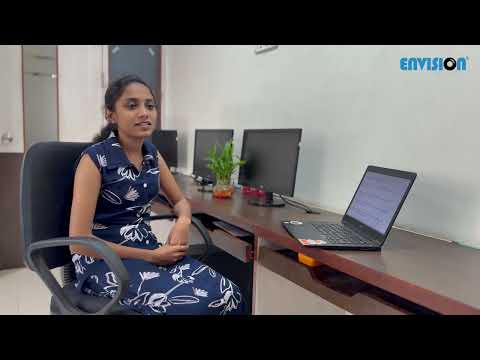
Priyanka Gaikwad
M.Sc. CS → Jr. Software Eng @ Sycamore
1-year gap, now placed at 2nd company with Envision's continued support
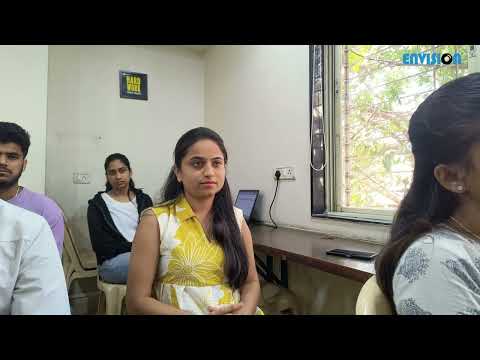
Rameshwari Mule
B.Sc. CS + M.Sc. → Frontend Dev @ Gefells
No roadmap → step-by-step guidance → placed with offer letter
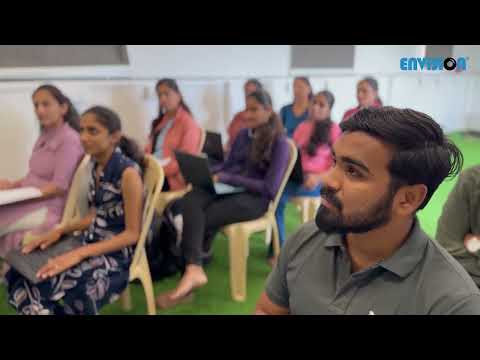
Sahil Jadhav
B.Sc. CS → Jr. Software Eng @ Sycamore
Weak in basics → step-by-step learning → first job at Sycamore

Sakshi Katrajkar
BCS (VIIT) → Java Full Stack Developer
No confidence after COVID online college → rebuilt completely at Envision
Envision Offers Full Stack Java course in Pune With Placement, focus on providing interview support, mock interviews, resume building and connecting you with our hiring partners. After the course, a structured placement program follows. Over 8000+ students have been placed in top MNCs. Check Placement Process
Envision institute offers several advantages for students:
Our Student success story- Prathemesh who first joined as a fresher, got placed at 6 LPA, continued training with envision, and then switched to a 12 LPA role after 2 years.

Software Developer

Software Engineer

Frontend Developer

Trainee Frontend Developer

Software Developer

Trainee Frontend Developer

Full Stack Developer

Web Developer & Team Leader

Junior Web Developer

Web Designer

Junior Web Developer

Associate Software Developer

Frontend Developer

Junior Software Engineer

Junior UI Developer

Software Development Executive

Java Developer

Java Backend Developer in Spring Boot

Software Developer

Software Developer

Jr. Web Developer

Project coordinator

Java Full Stack Developer

UI/UX Designer

Frontend Developer

Frontend developer

System Engineer

Frontend Developer

Associate Software Engineer

Project Engineer

Associate Software Developer

Frontend React Developer

WordPress Developer

Associate Software Engineer

Full Stack Engineer (MERN Stack)

Java Developer

Web Developer
See why choosing the right training approach directly affects placement outcomes. Read why enrolling in a Java programming course in Pune is a smart move
Projects include responsive websites, JavaScript applications, React applications, Java database applications, Spring Boot REST APIs and a complete React + Spring Boot + MySQL full stack application.
Build a responsive company website using HTML5, CSS3, Flexbox, Grid and JavaScript.
Create an application using JavaScript, DOM manipulation, events, forms and API integration.
Build an e-commerce frontend with React, routing, reusable components, forms and API integration.
Create a Java application connected with MySQL using JDBC and implement CRUD operations.
Develop a REST API using Spring Boot, Spring Data JPA, Hibernate and MySQL.
Build a complete application using ReactJS → Spring Boot → MySQL. The project brings together frontend development, Java programming, REST APIs, authentication and database operations.
These projects give you practical experience connecting React, Spring Boot, REST APIs and MySQL — the core of the Java Full Stack Developer Course.
A Full Stack Java course covers frontend development, Core Java, databases, JDBC, Servlets, Spring Boot, REST APIs, JPA/Hibernate and frontend-backend integration. This course also includes ReactJS for modern frontend development.
This HTML CSS Course covers structured pages, styling and responsive layouts.
Web Development Fundamentals
CSS3
Practical Work
This JavaScript Course covers programming, the DOM, events and asynchronous APIs.
JavaScript Fundamentals
Modern JavaScript
DOM and Events
Asynchronous JavaScript
Practical Projects
This React JS Course covers components, routing, hooks and API integration.
React Fundamentals
React Application Development
React Hooks
API Integration
State Management
Practical Work
This Core Java Course covers Java fundamentals, OOP, collections, exceptions and multithreading.
Java Fundamentals
Object-Oriented Programming
Exception Handling
Collections and Generics
Multithreading
Modern Java
This MySQL Course covers SQL, database design, queries, joins and relationships.
SQL Fundamentals
SQL Operations
Functions and Joins
Database Design
Students learn what is JDBC — how Java applications communicate with databases — then Servlet JSP for traditional Java web applications before moving into Spring Boot.
JDBC
Servlets
JSP
This Spring Framework and Spring Boot Course covers Spring MVC, Spring Boot and REST API development.
Spring Fundamentals
Spring MVC
Spring Boot
REST API Development
Students use Hibernate JPA so the Java backend communicates with the database through object-relational mapping and Spring Data JPA.
Hibernate
Spring Data JPA
This module covers authentication, authorization and JWT with Spring Security for REST APIs.
Topics Covered
This Java Full Stack Project module brings the frontend and backend together.
Frontend — ReactJS
Backend — Java + Spring Boot
Database — MySQL
Integration
Topics Covered
In practical terms, here is how the fees are structured in the market:
(2–3 months)
(5–6 months with frontend, backend, database, tools)
New batches are formed regularly. You can join the next available batch based on your schedule and learning preference.
Next batch starts in
Morning, afternoon, and evening slots available for consistent daily learning.
Ideal for working professionals balancing job and learning.
Batch starts based on inquiry. Choose timing that fits your schedule.
Batch allocation is limited to maintain focused learning and individual attention.
Choosing the right training is not about claims. It’s about how consistently results are delivered.
| Feature | Envision Institute | Other Institutes in Pune |
|---|---|---|
| Placement Approach | Structured placement system with real student outcomes. Check Placement Process. | Often claim “100% placement” without clarity on process |
| Placement Transparency | Real student data, roles, and company joined. Check Students Placed. | Limited or selective placement showcase |
| Student Reviews | Genuine reviews with detailed feedback. Check Google Reviews. | Many reviews are generic or repetitive |
| Teaching Approach | Concept → Practice → Project-based learning | Often theory-heavy with limited execution |
| Individual Attention | Focus on each student’s progress and doubt-solving | Batch-based teaching with limited personalization |
| Doubt Support | Continuous doubt resolution during and after sessions | Doubt sessions limited or scheduled |
| Learning Mode | Online + Offline + Hybrid flexibility | Mostly fixed batch structures |
| Batch Flexibility | Weekday and weekend options available | Available but often limited flexibility |
| Faculty Quality | Supportive trainers with practical explanation approach | Depends on trainer, consistency varies |
| Projects | Real-world applications built step-by-step | Basic or demo-level projects in many cases |
| Learning Environment | Structured, focused, and productivity-driven | Varies across institutes |
| Placement Support | Resume + mock + interview calls + guidance | Placement assistance often limited to references |
The training is strict and disciplined.
While learning if you build real applications, understand system logic, and handle technical interviews with clarity. You can apply for job roles like
Build backend logic, write structured code, and handle real application workflows.
Work with APIs, databases, and server-side systems used in production environments.
Develop complete applications — from frontend interfaces to backend architecture.
Understand how structured training directly impacts your chances of getting hired. Read how full stack Java classes in Pune help you land a developer job faster
Java programming course in Pune can prepare you for certification by aligning topics (data types, operators, OOP, encapsulation, inheritance, polymorphism, exceptions and basic APIs) with the exam blueprint.
You receive a certification from Envision Computer Training Institute after successfully completing the program and project work.
We use a high-security verification system. All certificates feature a unique QR code and link for instant employer verification.
Verify Sample Certificate ↗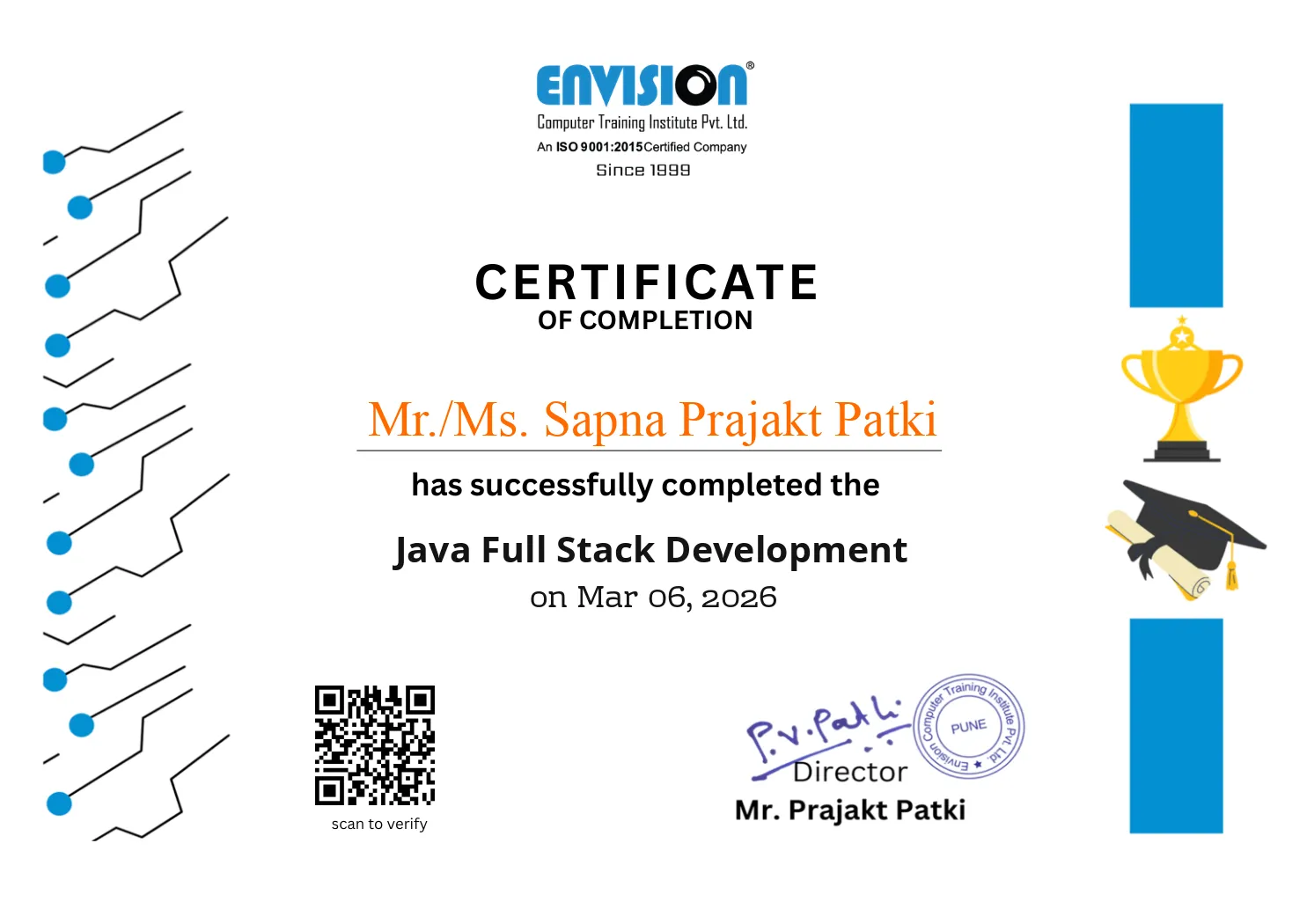
For students who want to go deeper, you can prepare for globally recognized certifications from Oracle Corporation.
These certifications help strengthen your profile for specific global roles but are not mandatory for getting placed.
Whether you learn through a java programming course in pune or a Full Stack Java course in Pune, prepare for these common interview areas:
OOP concepts, access modifiers, overloading vs overriding, interfaces vs abstract classes, immutability of String, equals() and hashCode(), exceptions and custom exceptions
List vs Set vs Map, ArrayList vs LinkedList, HashMap vs TreeMap, concurrent collections
threads, Runnable, synchronization, volatile, thread pools, executors
dependency injection, bean scopes, configuration, profiles, REST controllers, exception handling, Spring Data JPA, security basics
why microservices vs monolith, inter-service communication (REST, messaging), configuration management, circuit breakers, service discovery
joins, indexing, normalization, writing queries to fetch, filter and aggregate data
Git basics, build tools, simple questions on Docker or cloud in more advanced interviews
Institutes like envision when preparing students for “Java Course” often include mock interviews and coding tests alongside technical training so students can handle both theory and practical rounds.
Join Pune’s leading IT training ecosystem. Our state-of-the-art campus is designed to provide you with the best learning environment, fully equipped labs, and direct access to industry expert mentors.
Plot No.3, Yasho Parva, 1st Floor, Shree Sant Eknath Nagar Part I, near Rajarshi Shahu Bank, Bibwewadi, Pune, Maharashtra 411037
Yes. Java continues to power enterprise software, banking platforms, backend systems, cloud applications, and large-scale web services. Companies consistently hire developers with strong object-oriented programming and framework knowledge. Completing structured Java training builds long-term career stability.
Students typically apply for roles such as Java Developer, Backend Developer, Junior Full Stack Developer, Software Engineer, or Application Developer. The course focuses on practical coding and real frameworks, which helps during technical interviews.
Freshers with strong project skills and framework exposure generally start between ₹3 LPA and ₹6 LPA. Growth depends on coding confidence, real project experience, and interview preparation.
Yes. The program starts from Java programming basics and gradually moves into advanced development. Many students from non-technical backgrounds successfully transition into software roles through consistent practice.
Yes. OOP concepts such as classes, inheritance, polymorphism, abstraction, and encapsulation are taught with real coding examples. These concepts form the foundation of scalable enterprise development.
Yes. Students gain exposure to frontend technologies like HTML, CSS, JavaScript, and React along with backend development using Core Java, Advanced Java, Hibernate, Spring Boot, and database integration.
Yes. Students work on practical applications such as student management systems, REST API-based projects, e-commerce modules, and backend simulation systems. These projects strengthen resumes and GitHub portfolios.
Yes. Envision Institute provides structured placement support including resume preparation, mock interviews, technical guidance, HR preparation, and continuous job opportunity updates until placement.
Placement timelines vary based on practice level and interview readiness. Students who actively complete projects and prepare seriously often start attending placement drives during or soon after training.
Yes. Students attending online Java classes receive the same career guidance, interview preparation, and placement assistance as classroom learners.
Yes. Students receive a course completion certificate after finishing training and projects. Certification supports credibility when combined with practical coding skills.
ECTI has a long training legacy with faculty experienced in teaching programming fundamentals and real project workflows. Trainers focus on logic building, coding discipline, and interview readiness.
Yes. The institute has years of placement experience and structured preparation processes. Many students secure their first software roles through guided placement support and interview training.
Yes. Programming skills improve through consistent practice. Students are encouraged to write code daily, complete assignments, and build projects to become confident developers.
Yes. Flexible batch options are available for college students and working professionals who want to upgrade their skills without affecting their routine.
Yes. Students completing structured Java training gain confidence to develop backend applications, integrate databases, and work with frameworks in real development environments.
Java programming is the process of designing, building, and maintaining applications using the Java language. Java follows the principles of Object Oriented Programming (OOP), which allows developers to write clean, reusable, scalable, and maintainable code.
If you are learning java programming basics, Java gives you a strong foundation that transfers easily to other languages and technologies.
Java is not just another programming language — it is a robust, object-oriented programming language trusted by enterprises for over two decades.Java programming course in Pune
Today, Java is used in:
This is why Java programming and object-oriented programming in Java continue to have high search demand (10K–100K) and consistent job openings in Pune and across India.
Java is a pure object oriented programming language, which means it organizes software using objects and classes instead of procedural logic.
An object oriented program in Java reflects how real-world systems work, making Java ideal for enterprise-level applications and long-term projects.
Our Java course in Pune ensures you don’t just memorize concepts — you apply them in real coding scenarios.
The Java Course at Envision (ECTI Pune) is structured in progressive stages, ensuring clarity for beginners and depth for advanced learners.
Course Highlights:
A modern Java developer must understand how applications look and behave on the browser.
HTML & CSS Module:
You will learn how to build semantic, responsive, and visually appealing web pages.
Key Topics:
Bootstrap – Responsive Web Design Made Easy
Bootstrap simplifies frontend development using pre-built components and a responsive grid system.
Key Topics:
JavaScript & jQuery
To build dynamic applications, JavaScript is essential.
ReactJS is widely used in full stack Java development for building scalable single-page applications (SPAs).
Key Topics:
This is the heart of our Java course in Pune.
Core Java Topics:
Advanced Java Topics:
This ensures mastery of java object oriented programming language concepts used in real systems.
MySQL – Database Integration
Every backend application requires a database.
Hibernate & Spring Boot
This is where Java becomes enterprise-ready.
This module prepares you for Java full stack development course roles.
Fill the form and speak with a course counsellor. Get clarity on fees, syllabus, and career path.